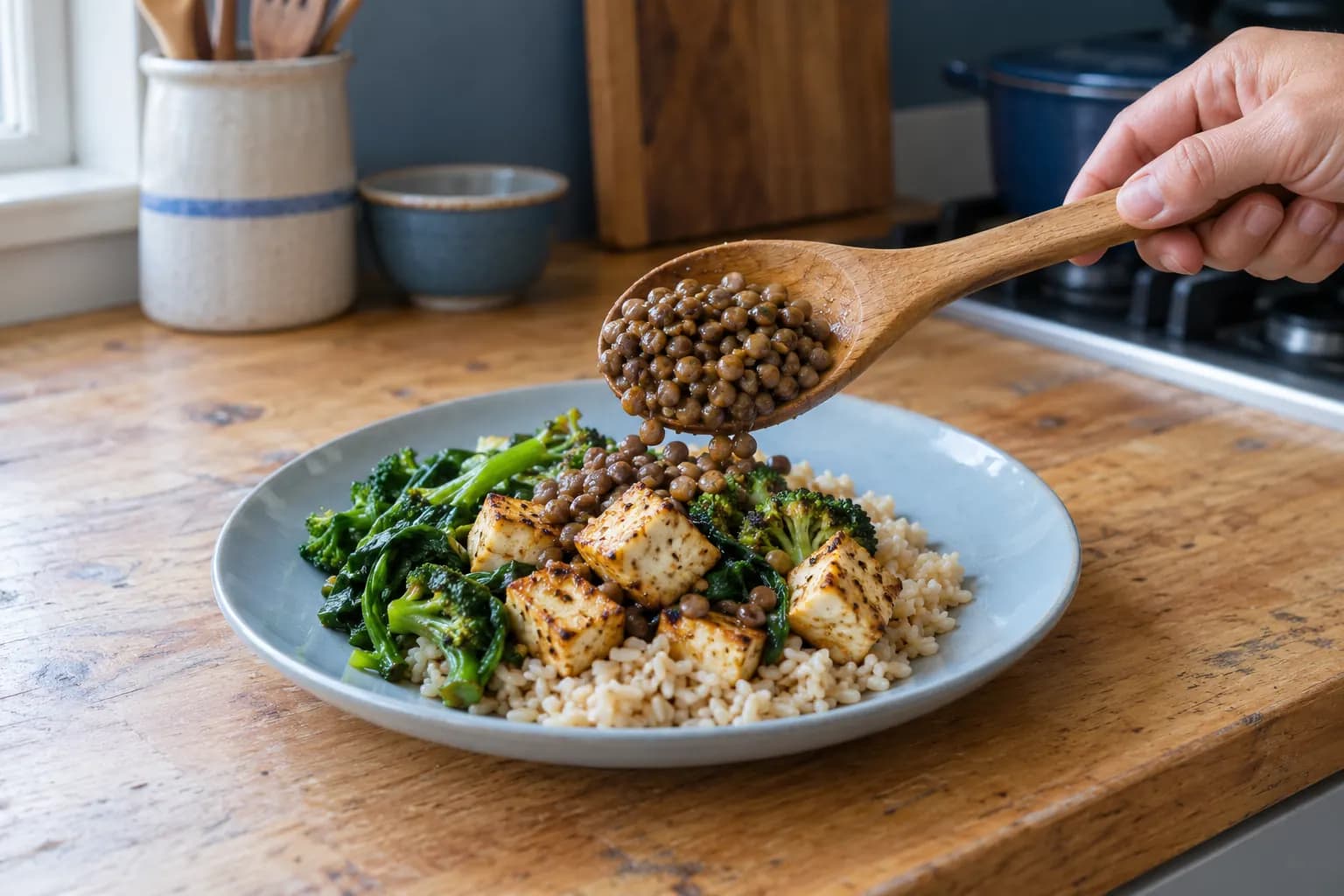
The key points
- Collagen occurs in animal tissues; plant foods supply supporting nutrients rather than collagen.
- A varied diet provides the protein, vitamin C and minerals used in normal collagen production.
- Bone broth varies, and supplement studies cannot establish the effects of ordinary collagen-containing foods.
Foods that contain collagen include animal skin and connective tissue, such as fish skin, chicken skin and the connective tissue in meat. Gelatin is made from collagen, and bone broth can contain collagen-derived proteins. Fruit, vegetables, beans, nuts and seeds do not naturally contain collagen. Some provide nutrients your body uses to make its own.
That distinction matters when a list of “collagen rich foods” mixes oranges with chicken skin. Both can contribute to a diet, but they contribute different things. Neither a particular food nor a daily broth guarantees smoother skin or healthier joints.
What is collagen?
Collagen is a structural protein in animals, including humans. It helps give tissues such as skin, tendons, cartilage and bone their framework. It is built from amino acids, the small building blocks that make up proteins.
Your body makes collagen rather than depending on a supply of ready-made collagen from meals. Food supplies raw materials for that process. The Harvard Nutrition Source overview separates foods containing animal collagen from foods providing protein and other nutrients involved in its production.
“Contains collagen” describes what is in a food. It does not tell you what eating that food will do to a wrinkle, a sore knee or bone strength.
Which foods actually contain collagen?
The clearest distinction is between animal tissues and foods that supply supporting nutrients. This table is a guide to the difference, not a ranking by collagen grams. Amounts depend on the tissue, product, portion and preparation; there is no reliable universal “highest collagen food” serving in the evidence reviewed here.
| Food | Contains collagen? | What it provides | Practical note |
|---|---|---|---|
| Fish skin | Yes, naturally | Collagen in skin tissue | Choose an edible, properly prepared skin-on portion if you enjoy it. |
| Chicken skin and connective tissue | Yes, naturally | Collagen in animal tissues | Skin is one part of a meal, not a required daily serving. |
| Connective tissue in meat | Yes, naturally | Collagen that changes during cooking | Tougher cuts are different from treating every meat portion as equally collagen-rich. |
| Gelatin | Collagen-derived | Processed collagen protein | Ordinary gelatin is animal-derived; agar and pectin are different ingredients. |
| Bone broth | Can contain collagen-derived proteins | Variable protein and amino acids | A cup is not a standardized collagen dose. |
| Oranges and other citrus fruit | No | Vitamin C | Provides a synthesis nutrient, not collagen. |
| Strawberries | No | Vitamin C | “Berries contain collagen” confuses a nutrient with the protein itself. |
| Red or green sweet peppers | No | Vitamin C | Also called capsicum in many countries. |
| Beans, lentils and chickpeas | No | Protein and other nutrients | Useful choices for meals without animal collagen. |
| Cashews and sunflower seeds | No | Copper and some protein | A modest addition can add variety; no collagen promise is needed. |
| Milk, yogurt and ordinary eggs | Not meaningful dietary collagen sources | Other proteins | Use them according to your preferences; protein content is not collagen content. |
The animal-source and processing distinctions are supported by the 2024 review of collagen sources and derivatives. Plant nutrient examples come from the NIH fact sheets linked below. The table's meal suggestions are practical examples, not tested treatments.
Fish skin, chicken skin and meat connective tissue
These tissues contain structural collagen. This does not mean you need to add extra skin, tendons or unfamiliar animal parts to your diet. If they are already foods you enjoy, they can be eaten as part of normal meals, with appropriate preparation and food handling.
Cooked food does not necessarily retain collagen in its original structure. Heating can change it, and prolonged moist cooking can turn some into gelatin. A stewed cut of meat, a grilled skin-on fish and a bowl of broth therefore should not be treated as identical products.
Choose food for the whole meal, including enjoyment, affordability and dietary needs. There is no need to change a vegetarian diet just to obtain animal collagen, or to buy costly cuts because a beauty list calls them “best.”
Gelatin is a collagen derivative
Gelatin is produced by processing collagen from animal tissues. Calling it collagen-derived is more precise than calling it fresh, intact collagen. It can be used in ordinary cooking, but a gelatin dessert has other ingredients too; it is not a complete meal or a skin treatment.
Check an ingredient list if you avoid animal products. A dessert set with agar or pectin may be suitable for your diet, but those setting agents do not become collagen because they make a similar texture. The dietary suitability of any finished product depends on all its ingredients.
Does bone broth contain much collagen?
It can contain gelatin and other collagen-derived proteins, but the amount varies. Ingredients, water volume and cooking method matter. The phrase “bone broth” alone cannot tell you how much collagen-derived protein is in a cup.
A 2019 laboratory analysis of bone broths found considerable variation in relevant amino acids across preparations. Its standardized broths supplied less of the measured amino acids than the reference collagen supplements. This was a food-composition study, not a trial showing whether broth improves skin or joints.
If you like broth, use it as food: a soup base or part of a meal. Check packaged products for total protein and salt. Total protein on a label does not by itself identify the amount of collagen.
A broth that gels when chilled can indicate gelatin is present. That texture still does not provide a measured dose or establish a health benefit. This guide does not claim that bone broth heals the gut.
Do plant foods contain collagen?
No plant food naturally contains collagen. Citrus fruit, berries, garlic and leafy greens are not exceptions. Their nutrients do not make the foods themselves collagen sources.
People who avoid animal collagen can still supply nutrients used in normal collagen production. A varied vegetarian or vegan diet can include pulses, soy foods, grains, fruit, vegetables, nuts and seeds. If your vegetarian diet includes dairy or eggs, these add other proteins; they are not a reason to rename the diet “collagen-rich.”
The NHS vegetarian diet guide recommends varied protein sources and attention to overall nutritional adequacy. Collagen is only one reason your body needs nutrients. A diet should also meet its other needs, including reliable vitamin B12 provision when animal foods are avoided.
Foods that provide nutrients your body uses to make collagen
Vitamin C foods
Vitamin C is required for normal collagen synthesis. It is a necessary ingredient in the process, not evidence that eating extra vitamin C will visibly increase skin collagen when your intake is already adequate.
The NIH vitamin C fact sheet lists oranges, peppers, kiwifruit, broccoli and strawberries among food sources. Choose affordable options you like and can obtain regularly. Fresh, frozen and cooked produce can all have a place in meals; amounts vary, and heat and prolonged storage can reduce vitamin C.
Enough protein from varied foods
Food proteins provide amino acids. Useful everyday choices include dal, chickpeas, rajma or other beans, tofu, tempeh, nuts and seeds. Dairy, eggs, fish and meat are additional options for people who eat them.
You do not have to track individual collagen-related amino acids or arrange a special “collagen plate.” Start by including a protein source in ordinary meals and eating enough overall. Our vegetarian protein food guide offers more meal ideas; this article is not a personalized protein prescription.
For example, a bowl of dal with rice and vegetables answers a different need from a cup of broth on its own. The useful question is whether your eating pattern supplies a range of nutrients, rather than whether every ingredient contains collagen.
Copper and zinc
Copper helps enzymes involved in connective tissue synthesis. NIH's copper fact sheet identifies foods including cashews, sunflower seeds, whole grains, tofu and chickpeas as sources.
Zinc contributes to protein synthesis and wound healing. The NIH zinc fact sheet includes meat and seafood, as well as beans, nuts, whole grains and dairy among dietary sources. Zinc from plant foods is less readily absorbed, but these foods still contribute to intake.
Neither mineral needs to be promoted as a wrinkle remedy. High-dose zinc supplements can interfere with copper absorption. Avoid assuming that combining extra minerals with collagen will work better; an identified deficiency and an adequate diet are different situations.
Does eaten collagen go straight to your skin or joints?
Your digestive system breaks food proteins down before your body uses their amino acids. The NIDDK explanation of digestion describes this breakdown and absorption.
Some small collagen-derived peptides, meaning short chains of amino acids, can also reach the bloodstream after ingestion. A 2022 review of digestion and tissue remodeling discusses this evidence. Its authors reported collagen-industry research funding. The absorption evidence does not mean intact food collagen travels directly from a meal into your face or knee.
Supplying ingredients for a biological process and demonstrating a noticeable benefit in people are separate questions. The body uses nutrients across many tissues; a food label cannot promise their destination.
Can eating collagen improve your skin?
The evidence does not establish that ordinary collagen-containing foods erase wrinkles or reverse aging. Most clinical research in this area tests collagen supplements, not skin-on fish, gelatin desserts or household bone broth.
A 2025 meta-analysis of 23 randomized trials involving 1,474 participants found improvements in skin measures when all trials were pooled. However, benefits were not significant in the higher-quality studies or in studies without pharmaceutical-company funding. That makes a confident promise about skin aging difficult to justify.
A 2026 umbrella review of earlier meta-analyses reported favorable pooled results for skin hydration and elasticity. It also rated most included reviews as low or critically low quality. Its literature search ended in March 2025, before the other review was published. These assessments differ, and a newer publication date does not remove the underlying uncertainty.
The practical conclusion is modest: food can support nutritional needs, while a visible skin benefit from dietary collagen remains unproven. If your concern is dryness or irritation, our gentle skin and lip care guide addresses that separate problem. Persistent skin symptoms deserve appropriate assessment rather than a more elaborate food list.
What about joints and bones?
Joint symptoms
Some supplement research is encouraging for people with knee osteoarthritis. A 2025 updated meta-analysis of 11 trials with 870 participants reported improvements in pain and function. Results varied substantially between studies, and the products and study settings were not identical.
That is evidence about specific supplements in people with an established joint condition. It does not show that a broth or a food containing collagen cures joint pain, rebuilds cartilage, or prevents osteoarthritis in healthy people. Persistent pain, swelling or reduced movement should be assessed; changing meals is not a substitute for finding the cause.
Bone health
In a 2018 randomized trial, 131 postmenopausal women with reduced bone density were assigned specific collagen peptides or placebo for a year. Bone-density results favored the collagen group. The study had partial manufacturer funding, and 102 participants completed it.
This was a particular supplement in a selected population. It did not establish fewer fractures or a benefit from ordinary collagen-containing meals. Bone density is a measurement, not the same outcome as avoiding a broken bone. A diagnosed bone condition needs an appropriate care plan, not a food or supplement promise.
Do you need collagen supplements?
You do not need to eat ready-made collagen for your body to make it. A supplement is not automatically necessary because a food list mentions collagen, and this guide does not recommend a commercial product or dose.
If you are considering one for a specific concern, clarify the goal first: a symptom, a diagnosed condition or a cosmetic preference. Ask what human evidence applies to that goal, what product was actually tested, and what uncertainty remains. Findings about one preparation should not be assumed to apply to every powder or capsule.
Check animal sources against allergies, religious requirements and dietary preferences. A product marketed as a plant “collagen builder” may contain supporting nutrients rather than collagen; read the actual ingredients. Treating an established nutrient deficiency is a separate decision that may need individual advice.
A practical day of eating
You can organize meals around foods you already use. The following is an adaptable example, not a tested collagen treatment or a calculation of everyone's daily requirements.
- Breakfast: oats with plain yogurt or a protein-containing soy alternative, plus an orange or strawberries. Adjust the choice to your diet and check alternative-product labels.
- Lunch: dal, chickpea curry or rajma with rice or roti, plus vegetables. Red or green capsicum can be part of a salad or cooked dish.
- A snack if wanted: fruit and a modest portion of cashews or seeds. There is no need to buy a specialty “beauty food.”
- Dinner: tofu or beans with vegetables and a grain or potato. If you eat fish or poultry, a properly prepared portion can replace the tofu or beans; skin is optional.
Change portions and ingredients to suit appetite, availability and individual needs. If you follow a medically prescribed diet, keep that plan and ask your care team before changing it or adding a supplement. Different households will use different meals, and that is compatible with the same basic pattern: a protein source, varied produce and enough food overall.
For workdays, our vegetarian lunch guide can help turn those choices into a practical packed meal. You do not need every food in the table, and you do not need to drink broth every day.
Common collagen food myths
- “Oranges and berries contain collagen.” They do not. Their vitamin C is relevant to normal synthesis, which is a different claim.
- “Garlic or leafy greens are plant collagen.” They are plant foods. This guide makes no claim that a special amount of garlic or chlorophyll rebuilds human skin collagen.
- “More dietary collagen means more collagen in my face.” Digestion and the body's use of nutrients make that direct transfer claim misleading.
- “A cup of bone broth equals a supplement dose.” Recipes vary, and total protein is not a verified collagen measurement.
- “Animal protein always means collagen.” Milk and ordinary eggs provide other proteins; an animal origin alone does not make a food a meaningful collagen source.
Frequently asked questions
What are the best foods for collagen production?
There is no proven single best food. Think about the whole eating pattern: adequate protein, vitamin C foods and sources of relevant minerals. Choose foods that fit your diet, rather than ranking them by promised beauty benefits.
Are egg whites high in collagen?
Ordinary egg whites are primarily a source of other proteins, not a meaningful collagen source. A review of eggshell membranes distinguishes collagen in those membranes from the main proteins in egg white. You can include eggs if they fit your diet without calling them collagen-rich.
How much collagen should I get from food each day?
The evidence reviewed here does not establish a daily dietary collagen target for generally healthy adults. Supplement amounts used in trials are study protocols, not a food requirement. No collagen gram target is needed to use the meal ideas above.
How long until these foods change my skin?
There is no established timetable for a visible effect from these ordinary foods. Diet, digestion and skin outcomes are different steps, and a supplement trial cannot supply a reliable deadline for a meal plan.
Can a vegetarian diet support normal collagen synthesis?
Yes. It can provide the nutrients used in that process without supplying collagen itself. Pay attention to overall dietary adequacy; avoiding animal collagen is not, by itself, evidence of a collagen deficiency.
What to remember
Animal tissues contain collagen, while gelatin and broth can supply its derivatives. Plant foods supply nutrients rather than collagen. Use that distinction to read food lists accurately, build meals you can sustain, and keep expectations about skin, joints and bones proportionate to the evidence.
Sources & references
Public resources that informed this guide. A source check is an editorial action, not an individual clinical review. Our sources policy.
- Harvard Nutrition Source: Collagen Checked October 7, 2026
- Wosicka-Frackowiak et al., 2024: Collagen sources and derivatives, review Checked October 7, 2026
- NIDDK: Your digestive system and how it works Checked October 7, 2026
- Holwerda and van Loon, 2022: Collagen ingestion and connective tissue remodeling, narrative review Checked October 7, 2026
- Alcock et al., 2019: Bone broth amino acid content and variability Checked October 7, 2026
- NIH Office of Dietary Supplements: Vitamin C, health professional fact sheet Checked October 7, 2026
- NIH Office of Dietary Supplements: Copper, health professional fact sheet Checked October 7, 2026
- NIH Office of Dietary Supplements: Zinc, health professional fact sheet Checked October 7, 2026
- NHS: The vegetarian diet Checked October 7, 2026
- Myung and Park, 2025: Collagen supplements and skin aging, randomized-trial meta-analysis Checked October 7, 2026
- Ravindran et al., 2026: Collagen supplementation for skin and musculoskeletal health, umbrella review Checked October 7, 2026
- Simental-Mendia et al., 2025: Collagen supplementation for knee osteoarthritis, updated meta-analysis Checked October 7, 2026
- Konig et al., 2018: Collagen peptides and bone mineral density, randomized trial Checked October 7, 2026
- 2023: Eggshell membrane as a biomaterial for bone regeneration, review Checked October 7, 2026
Something needs clarification? Send an editorial correction.