The key points
- Combine a starchy food, a vegetarian protein food and vegetables; consider variety across the day or week.
- Choose a lunch that fits your access to a fridge or microwave, your budget and foods you enjoy.
- Keep perishable lunches chilled, and handle leftover rice with extra care.
For an ordinary vegetarian lunch, start with a starchy food, add a protein food you enjoy, and include vegetables or fruit. Then make the combination work for your day: something you can eat cold, reheat at work or assemble just before eating.
You do not need a different recipe every morning. A few adaptable combinations can be easier to use than a strict weekly menu.
Start with what your day allows
Before deciding what to cook, check the practical details:
- A fridge but no microwave: choose a sandwich, a bean salad with bread, or a cooked grain bowl that you can keep chilled.
- A fridge and a microwave: a portion of dal or a bean stew may be convenient, with bread or chapati and vegetables alongside.
- No reliable chilling: choose foods that can safely stay unrefrigerated, such as whole fruit, bread and an unopened shelf-stable bean pouch explicitly labelled ready-to-eat. Open it at mealtime and follow the packaging instructions. A homemade salad or yogurt should not spend the morning warming in a bag.
Think about how much you want to carry, whether the container seals well and whether you have time to sit and eat. These details can determine whether a lunch is useful in practice.
Build lunch from a few ordinary components
The NHS Eatwell Guide describes balance across a day or week, rather than requiring every meal to match a diagram. Use its food groups as a flexible starting point:
- Choose a base. Bread, chapati, potatoes, pasta or couscous can work. Choose wholegrain or higher-fibre versions when available and suitable for you.
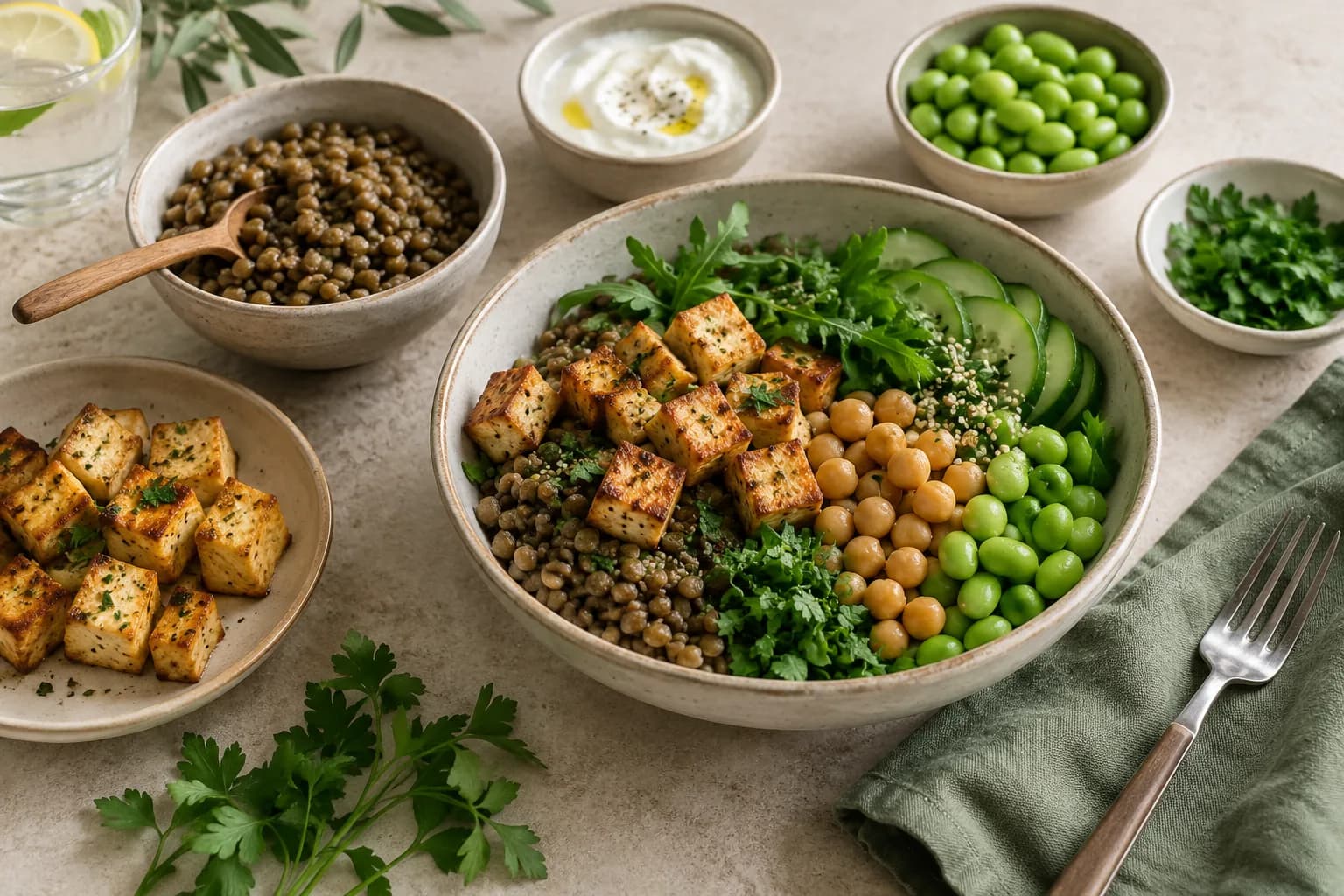
- Add a vegetarian protein food. Try beans, lentils, chickpeas or tofu, or paneer if you include dairy. Use cooked pulses or a product prepared according to its instructions.
- Include produce. Add vegetables you enjoy, or pack fruit alongside. Fresh, canned and frozen options can all contribute; cook frozen vegetables if the label requires it before using them in a cold meal.
- Make it taste like a meal you want. Herbs, lemon, spices or a little olive oil can suit a grain bowl. Keep wet dressings separate if they make your bread soggy.
A salad made mostly of leaves may need more components to work as your lunch. Adding a base and a protein food gives you a more varied combination. The amount to pack depends on your appetite and needs; these examples do not prescribe portions or promise a particular health outcome.
For more ingredient options, our vegetarian protein guide covers foods that can fit an active routine.
Four lunches you can adapt
Choose one combination to try, rather than buying ingredients for all four. The rows are meal ideas, not nutritionally identical substitutions.
| Lunch | How to put it together |
|---|---|
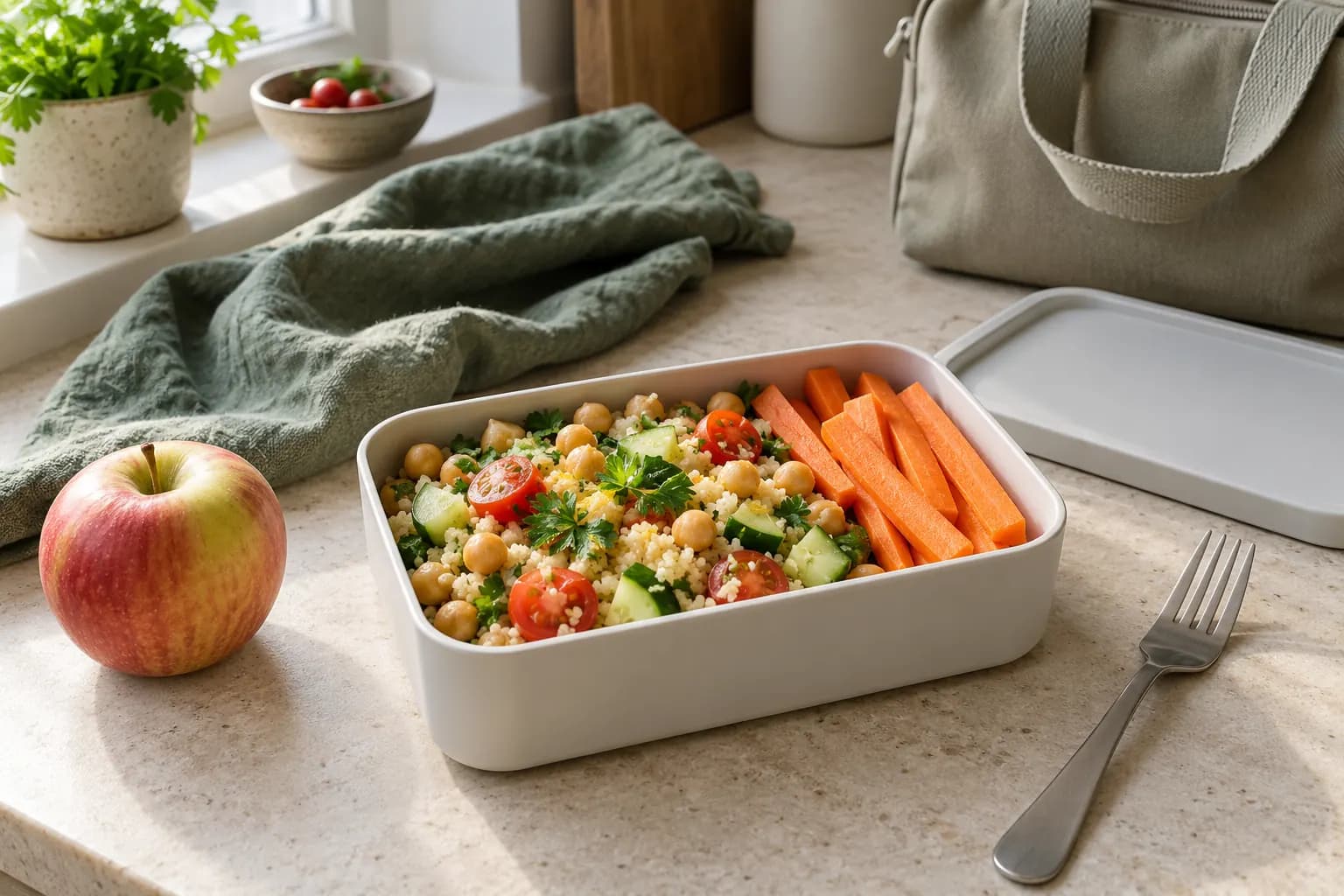
| Chickpea and couscous bowl | Prepare couscous as directed, cool and chill it safely, then add ready-to-eat chickpeas, cucumber, tomatoes and herbs. Keep the dressing separate until eating. |
| Lentil pita | Fill a wholemeal pita with ready-to-eat lentils and chopped vegetables. Add a yogurt dressing if you include dairy, or a suitable dairy-free option. |
| Dal and chapati | Pack a properly stored portion of dal for reheating, with chapati and cooked vegetables alongside. Reheat the dal thoroughly before eating. |
| Paneer or tofu sandwich | Use paneer or tofu prepared as its label directs, with bread and vegetables. Pack fruit alongside if you want it. |
Swap ingredients for cost, allergies, preferences and what is already in your kitchen. If a bought ingredient is not marked ready-to-eat, follow its cooking instructions. Our seasonal food ideas offer more ways to use familiar vegetables and pulses.
Prepare a small amount you will actually use
For tomorrow's lunch, you might set aside one dinner portion, wash produce and put a clean container where you will see it. Keep bread and dressing separate from moist fillings when practical. Make a short shopping list around one or two combinations, including a convenient backup.
Avoid treating Sunday cooking as permission to leave five lunches in the fridge until Friday. The Food Standards Agency's leftovers guidance advises refrigerating properly cooked leftovers within two hours, eating them within 48 hours or freezing them, and reheating only once until steaming hot throughout. Follow any shorter storage instructions on a product, and the rice guidance below. In very hot conditions, refrigerate sooner.
Label portions with the preparation date. Follow the original packaging and appliance guidance, including stirring and standing times when microwaving. Frozen vegetables that require cooking must be cooked before they become part of a cold lunch.
Keep a packed lunch cold
Vegetarian food still needs safe handling. Wash hands and preparation surfaces, rinse fresh produce under running water, and keep perishable ingredients chilled.
The FDA's transport guidance recommends a cooler with ice or frozen gel packs and a temperature of 40°F (about 4°C) or below. Keep the bag closed and use a fridge on arrival if one is available. An insulated bag without a cold source does not guarantee a safe temperature.
For perishable food without safe hot or cold holding, the FDA's limit is two hours, reduced to one hour above 90°F (about 32°C). Count time across preparation, travel and serving; do not restart the clock when you arrive. Discard food that exceeds these limits. Follow stricter local or product-specific advice where applicable.
Treat leftover rice separately
If you use rice instead of another base, do not apply the general 48-hour leftovers rule to it. The Food Standards Agency's rice advice is to cool it quickly, ideally within an hour, refrigerate it and consume it within 24 hours. Divide it into small portions; avoid leaving it in the cooking pot or rice cooker to cool.
Rice may be eaten cold when handled this way. If reheating, do so only once and heat it until steaming hot throughout. Reheating does not make poorly stored rice safe.
Consider the rest of your diet
Lunch is one opportunity for variety. The NHS vegetarian guidance highlights iron and vitamin B12. If you eat few or no animal foods, make sure you have a reliable B12 source. Check fortification labels on dairy alternatives rather than assuming every product supplies the same nutrients.
This is a general adult meal-planning guide. If you have a medical dietary restriction, are pregnant or need help adapting a vegetarian or vegan diet, a registered dietitian can advise on your overall needs. For an ordinary busy day, choose one lunch you can store safely, enjoy eating and make again.
Sources & references
Public resources that informed this guide. A source check is an editorial action, not an individual clinical review. Our sources policy.
- NHS: The vegetarian diet Checked October 3, 2026
- NHS: The Eatwell Guide Checked October 3, 2026
- FDA: Handling food safely while eating outdoors Checked October 3, 2026
- Food Standards Agency: Cooking your food and using leftovers Checked October 3, 2026
- Food Standards Agency: Home food fact checker, including rice safety Checked October 3, 2026
Something needs clarification? Send an editorial correction.