The key points
- Use short, warm washes and apply a fragrance-free moisturizer while skin is still damp.
- Choose a non-irritating lip balm and protect lips from sun outdoors.
- Persistent cracking, discomfort or non-healing lips need professional advice.
If your winter skin routine has become a shelf of products, simplify it first. Gentle washing, an appropriate moisturizer and a lip balm you tolerate are more useful starting points than frequent scrubbing or adding a new active ingredient every week.
Dryness can have several causes. Cold, dry conditions can be part of the picture, but a persistent problem may need assessment rather than another seasonal remedy.
Start with a gentler wash
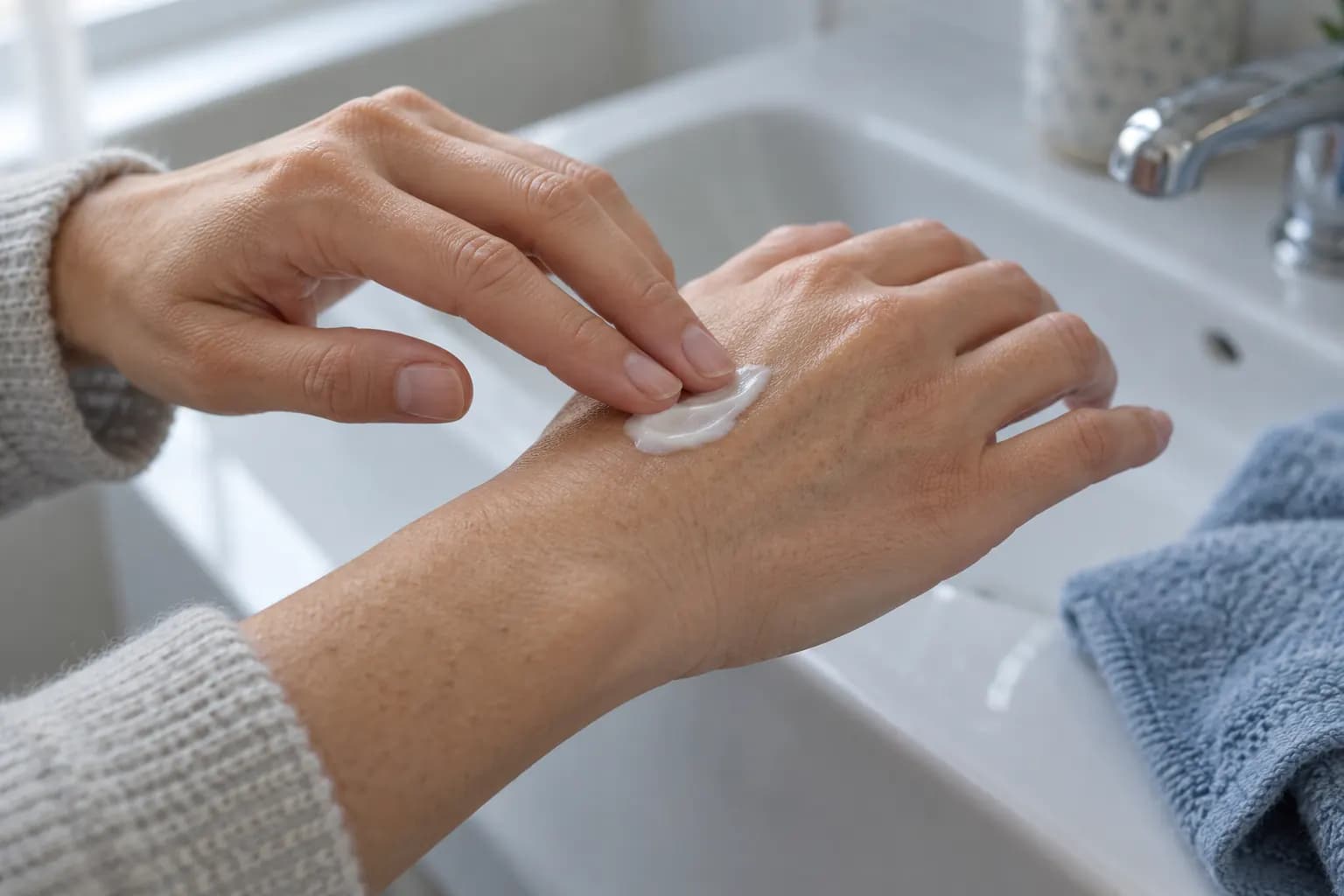
The American Academy of Dermatology recommends warm rather than hot water and short baths or showers of about five to ten minutes. Use a gentle cleanser, pat skin dry, then apply moisturizer while skin is still damp.
Choose a fragrance-free cream or ointment if suitable for you, and reapply when needed. Keep one in the place where you usually wash your hands so the routine is easy to remember. “Unscented” and “fragrance-free” do not always mean the same thing; read the packaging.
Give chapped lips a simple routine
Use a non-irritating lip balm regularly and before bed. AAD guidance includes white petroleum jelly as an option for very dry lips. If a product stings, burns or feels uncomfortable, stop using it rather than assuming that sensation means it is working.
Avoid licking, picking or biting chapped lips. Scrubs and flavoured or fragranced products can make an irritated surface harder to care for. A kitchen ingredient is not automatically a gentle skin treatment.
For outdoor lip protection, the AAD recommends a non-irritating balm with SPF 30 or higher, applied again every two hours outdoors. Winter sunlight still matters. Check the instructions and choose an option you tolerate.
Make the routine easy to repeat
Use a short checklist instead of a complicated product schedule:
- Put your moisturizer near your usual washing area.
- Keep lip balm where you prepare to leave home.
- Set aside products that consistently cause irritation.
- Choose comfortable gloves and clothing for the weather.
- If you use a humidifier, follow the manufacturer's cleaning and maintenance instructions.
You do not need a branded kit. If you are uncertain about ingredients or have a diagnosed skin condition, ask a pharmacist or dermatologist for advice suited to you.
Know when another cause needs attention
AAD advises seeing a dermatologist when dry skin is not improving. For chapped lips that do not heal after roughly two to three weeks of appropriate care, seek assessment; a different cause may be involved.
Do not rely on this guide to diagnose eczema, infection or an allergy. For persistent cracks, pain or a worsening problem, contact a healthcare professional. If winter clothing seems to trigger discomfort, our guide to irritation and contact allergy can help you organize observations for that conversation.
Eating a varied diet remains part of everyday care, but foods do not promise to heal a skin problem. See winter food ideas for ordinary meal inspiration without cure claims.
Sources & references
Public resources that informed this guide. A source check is an editorial action, not an individual clinical review. Our sources policy.
- AAD: Dermatologists' tips for relieving dry skin Checked October 3, 2026
- AAD: Seven tips for healing dry, chapped lips Checked October 3, 2026
Something needs clarification? Send an editorial correction.