The key points
- A cramp is not automatically caused by cold weather or a mineral deficiency.
- Gentle stretching or massage may ease a typical cramp; do not force painful movement.
- Sleep disruption, numbness, swelling or cramps lasting over ten minutes need assessment.
A sudden cramp can interrupt a walk or wake you at night. The season alone does not tell you why it happened. Some leg cramps have no clear cause; the NHS also lists factors such as muscle strain, dehydration, pregnancy and certain medicines.
This guide concerns general information about typical leg cramps. It cannot identify the cause of pain or rule out another condition.
During a typical cramp
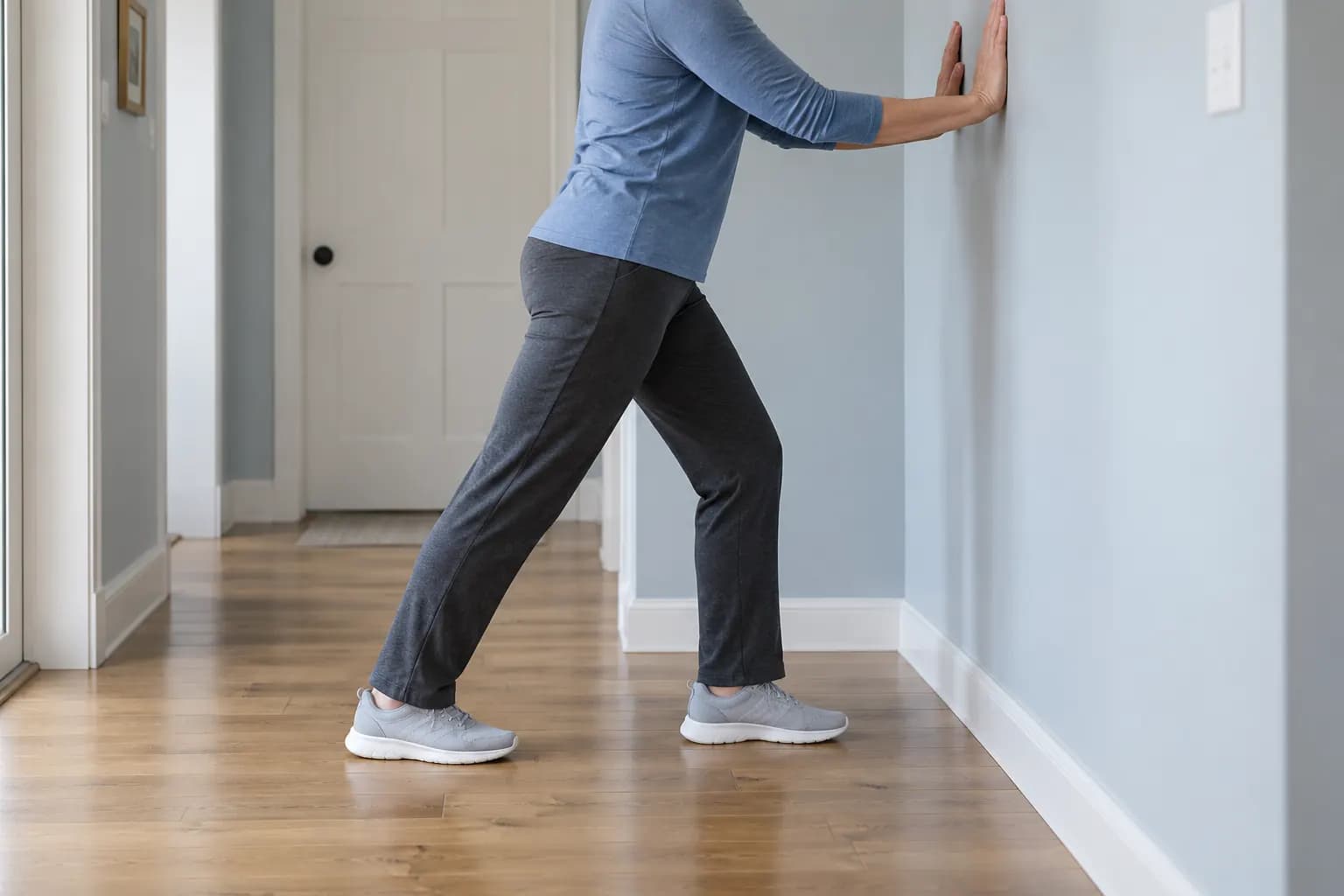
Gentle stretching or massage may help ease the muscle, according to the NHS. Stop what you are doing and avoid forcing a painful movement. Regular gentle calf stretching may reduce cramps for some people, but it does not guarantee that they will stop.
Do not assume you need salt, magnesium, a sports drink or a muscle-relaxing medicine. Treatment depends on the cause, and supplements or medicines are not suitable for everyone.
Plan a comfortable winter movement routine
Before an outing, choose a route, clothing and footwear that suit the conditions. Consider a shorter route close to home, or an indoor alternative if surfaces are icy. Give yourself permission to change the plan rather than finishing a route that feels unsafe.
Keep activity manageable when starting or returning after a break. CDC recommends starting slowly and building up gradually. A familiar indoor activity may be easier to fit into a cold day than an ambitious outdoor session.
Try a practical preparation list:
- Put everyday movement clothing somewhere easy to reach.
- Choose a safe space with enough room and a stable surface.
- Keep drinking water available, following any personal fluid restrictions.
- Note whether a particular activity repeatedly brings symptoms.
- Plan an alternative for bad weather rather than abandoning the routine altogether.
Our winter routine guide offers flexible meal and movement ideas. For comfort after washing or changing clothing, see winter skin care.
Record recurring symptoms
If cramps keep happening, note their location, duration and timing. Include changes in activity and any medicines you take. Bring that information to a healthcare appointment; do not stop prescribed medicine on your own.
When to seek medical advice
NHS guidance recommends seeing a clinician if leg cramps disturb sleep, come with numbness or swelling, or last longer than ten minutes. Seek urgent care if pain or other symptoms are severe or you feel seriously unwell. Do not treat all leg pain as a harmless cramp.
A clinician can assess possible causes and discuss suitable care. This is more useful than repeatedly buying products based on an assumed electrolyte problem. For everyday meal variety, our winter food guide keeps nutrition separate from claims that a food treats cramps.
Sources & references
Public resources that informed this guide. A source check is an editorial action, not an individual clinical review. Our sources policy.
- NHS: Leg cramps Checked October 3, 2026
- CDC: Getting started with physical activity Checked October 3, 2026
Something needs clarification? Send an editorial correction.